Strategy · Fashion e-commerce · 2023
Returns aren't a logistics problem. They're a representation problem.
A strategy project on why Europe's largest fashion platform was losing its most valuable customers, and why the fix was sitting in a department nobody had connected to the P&L.
Context
Zalando is Europe's largest fashion platform: €10.3bn revenue in 2022, over 50 million active customers, 7,000 brands, 1.8 million products, 25 markets. The German fashion e-commerce market was forecast to grow 10%, and Zalando led it at €2,062M, well ahead of Otto (€1,435M) and H&M (€828M).
On paper, the market leader was positioned to take more of a growing market.
Tension
In Q3 2023 the active customer base fell for the first time: 100,000 fewer customers, 4.3 million fewer orders. Orders per active customer dropped from 5.2 to 5.0.
The people who already used Zalando were using it less. Meanwhile 77% of 8,236 Trustpilot reviewers were rating it one star.
“Half of everything ordered came back. 42% of shoppers said they couldn't see themselves in the models. Those are the same problem.”
Returns were being managed as a logistics cost. Inclusivity was being managed as a brand values programme. Different teams, different budgets, no line drawn between them.
But 50% of items were returned because of incorrect sizing. And 42% of online shoppers said they didn't feel represented by the images of models, with 59% reporting that an item looked different on them than they expected.
A shopper who cannot see a garment on a body resembling their own is guessing at the fit. The guess is what produces the return.
Which makes inclusivity not a values initiative but the highest-leverage margin lever available to the business, and turns a cost centre into a growth strategy.
Approach
- 01
Qualitative research.
8,236 Trustpilot reviews, 77% one star, cross-read against Kununu and FashionUnited. The pattern was fit, not price, not delivery.
- 02
Rebuilt the journey around where people actually dropped off.
Losses clustered before checkout, at product understanding, not at payment.
- 03
Tested the diagnosis against what Zalando had already shipped.
Size recommendations launched July 2023. Returns stayed at 50%. So the problem wasn't recommendation accuracy; a recommended size still asks you to trust a number.
- 04
Sized each opportunity and mapped it to a lifecycle stage.
Unisex: 60% of German consumers open to it, 31% of the market Gen Z, €807M → €928M in DACH. Try-on: 42% don't see themselves in the models, returns modelled 50% → 30%.
Three interventions, mapped to the customer lifecycle
- 01
Universal browse
Awareness → Consideration
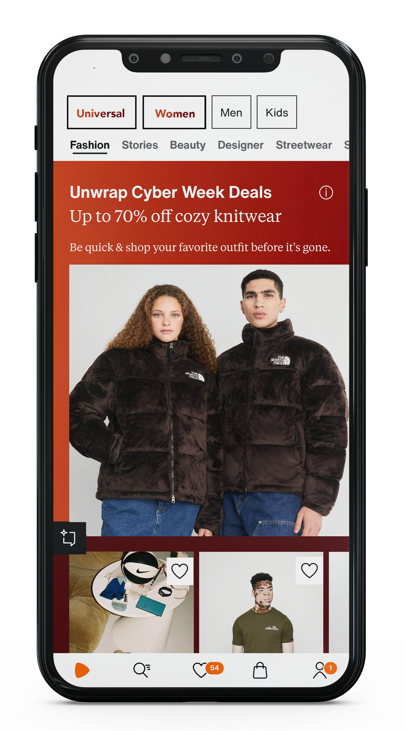
A gender-neutral filter and content layer replacing rigid Women / Men / Kids categorisation, letting shoppers browse without gender-specific constraints. Grounded in two figures: 60% of German consumers were already considering gender-neutral fashion, and Gen Z accounted for 31% of the German fashion market.
- 02
See My Fit
Consideration → Purchase
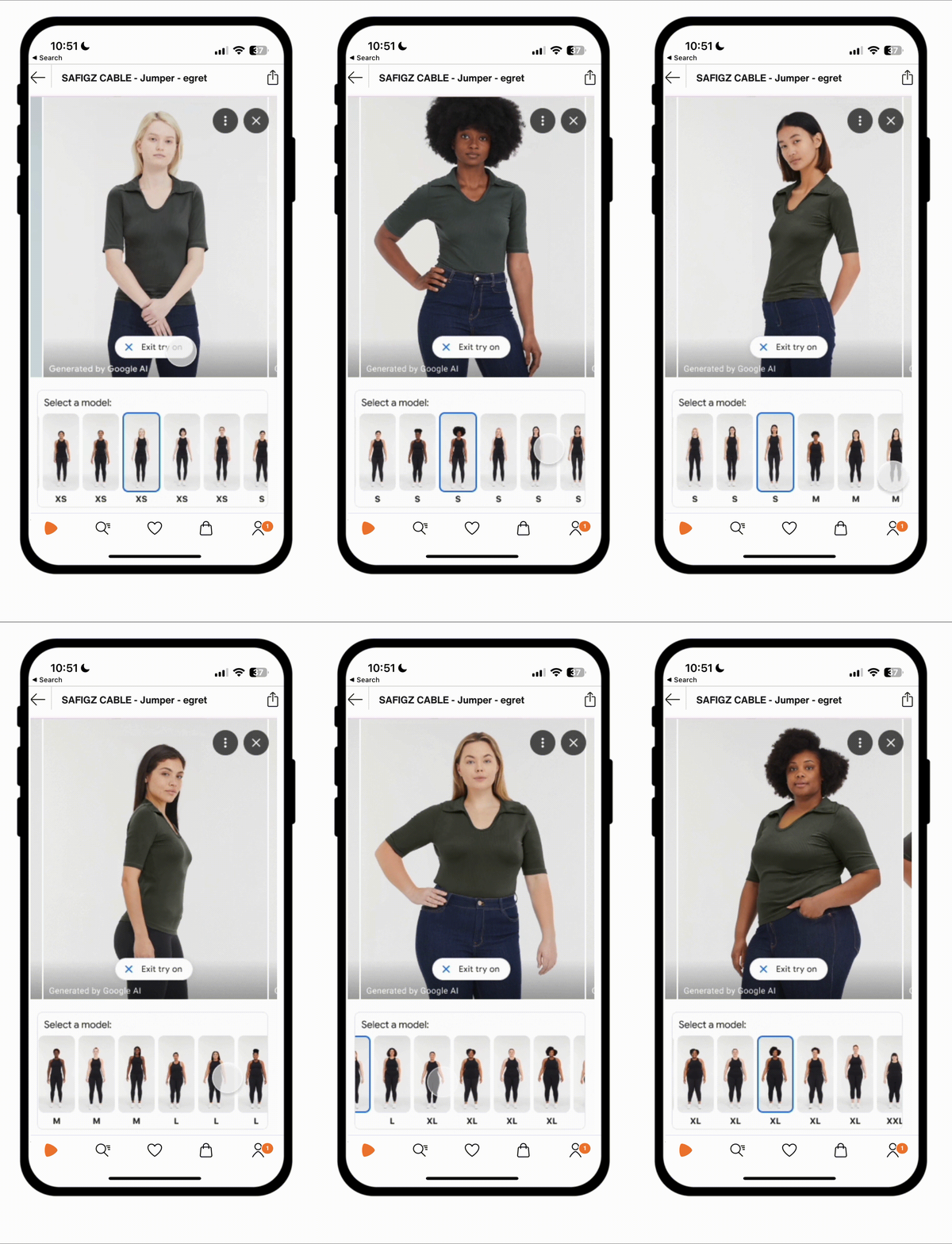
An AI/AR virtual try-on letting shoppers view any garment on models spanning the full range of available sizes, heights and body shapes. Evaluated Google's diffusion-based virtual try-on against Veesual on realism and production readiness: Google stronger on realism but still in testing, Veesual less realistic but already live with La Redoute.
- 03
Tiered loyalty
Retention → Advocacy
Replacing flat-fee Zalando Plus with Bronze, Silver, Gold and Plus tiers at €150, €330 and €500 spend thresholds. Industry research was consistent about what people actually want from a loyalty programme:
- 55% of shoppers want a free gift
- 42% want flat discounts on items they already like
- 18% want points, the mechanic retailers back most
Bronze
Entry
Welcome reward, birthday month discount
Silver
€150
Silver offers, free shipping on 2 orders
Gold
€330
Gold offers, free shipping on 4 orders, gift under €20
Plus
€500
Gift under €50, all existing Zalando Plus benefits
Gold costs €22 per customer to serve against a €330 spend threshold, at a 44% conversion rate into the programme.
Loyalty tiers and spend thresholds Tier Spend threshold Bronze Entry, €0 Silver €150 Gold €330 Plus €500 So the tiers reward gifts, discounts and free shipping. Spend qualifies you for the tier; it never becomes the reward itself.
Opportunity
Projections from the analysis, not realised results.
Universal browse
Awareness → Consideration
Modelled DACH revenue
+15% on unisex adoption · benchmark: ASOS +28% revenue in 2018 after going gender-neutral
Table view
| Today | €807M |
|---|---|
| Modelled | €928M |
See My Fit
Consideration → Purchase
Modelled return rate
20 points off the return rate; half of all items currently come back over sizing
Table view
| Today | 50% |
|---|---|
| Modelled | 30% |
Customer lifecycle
- Awareness
- Consideration
- Purchasing
- Retention
- Advocacy
- Universal browseAwareness → Consideration
- See My FitConsideration → Purchasing
- Tiered loyaltyRetention → Advocacy
Also see
All strategy work